




Do you or your child have difficulty swallowing, frequent heartburn or acid reflux, chest or stomach pain, vomiting, or trouble eating certain foods? Do you find yourself needing to drink extra water with meals, cutting food into very small pieces, chewing for a long time, or avoiding certain foods because they feel difficult to swallow? If food has ever felt like it was stuck in your throat or you have experienced a food impaction, these symptoms may be signs of a condition called eosinophilic esophagitis, or EoE.
EoE is a chronic inflammatory condition of the esophagus that can affect both children and adults. Because its symptoms can sometimes look like acid reflux, food allergies, or other digestive conditions, EoE may go undiagnosed for some time. Understanding the symptoms, risk factors, diagnosis, and treatment options can help you recognize when it may be time to talk with a healthcare provider.
What Is Eosinophilic Esophagitis?
Eosinophilic Esophagitis (EoE) is a chronic disease of the esophagus. In this condition, eosinophils (a type of white blood cell) infiltrate the esophagus and cause the esophagus to become inflamed. This chronic inflammation is caused by a protein produced by the eosinophils which leads to inflammation, scarring, thickening, and fibrous tissue remodeling of the esophagus.
Predisposing factors for EoE may include but are not limited to a personal history of atopy (allergic rhinitis, asthma, and eczema), a family history of atopy, and the male gender.
Symptoms of EoE may vary depending on the age of the person. In babies and younger children, symptoms may include eating difficulties, refusal to eat, failure to grow, stomach pain, vomiting, and trouble swallowing. In older kids and adults, symptoms may include acid reflux symptoms, chest pain, and trouble swallowing solid foods such as bread and meat. This can lead to food getting stuck in the throat causing “food impaction” which can lead to patients needing to seek treatment at the emergency department to have the food item removed.
EoE can cause anxiety around mealtime due to the concerns about choking and food impaction. Patients may change the way they eat including forgoing eating in public, consuming more water during meals, cutting food in smaller pieces, avoiding foods with hard textures, and chewing foods for a longer period.
Cow’s milk, wheat, egg, and soy are the most common foods implicated in EoE. Although these foods cause an “immune reaction” in the esophagus, skin testing and blood tests to foods are not reliable to identify foods that lead to EoE. This is because “most food allergy reactions in EoE are delayed and are caused primarily by immune mechanisms other than the classical IgE-mediated food allergy.”
Diagnosis requires endoscopy with biopsies of the esophagus. During this procedure, a gastroenterologist inserts a narrow tube down the esophagus, and takes biopsies of the lining of the esophagus. 15 eosinophils per high power field are needed to make the diagnosis of EoE. Once the diagnosis is made, treatment may include dietary elimination, proton pump inhibitors, swallowed topical steroids, and/or a biologic agent called Dupixent (dupilumab). Dilation may be required for severe narrowing of the esophagus. Studies suggest that no one treatment is better than another. Because EoE is a life-long condition, treatment must be continued as relapse will occur if the treatment is stopped. EoE must be followed with periodic endoscopies or esophageal string tests as an improvement in symptoms does not necessarily correlate with disease “remission.”
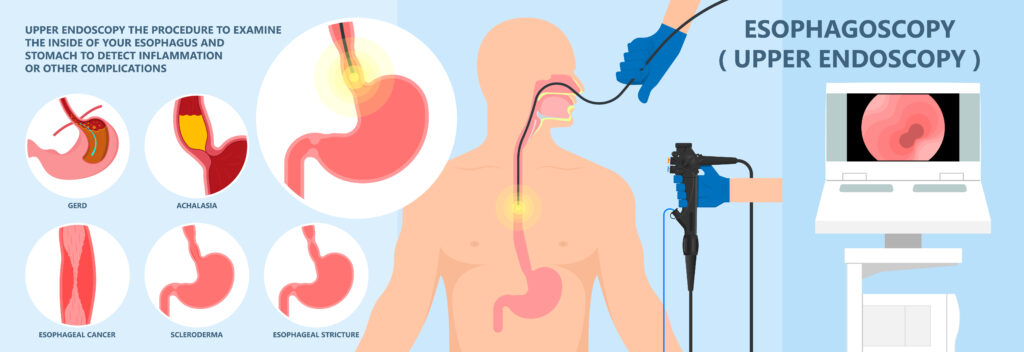
The Esophageal String Test (EST) is a minimally invasive way to monitor patients with a known diagnosis of EoE; however, it is not used to diagnose the condition. EST can be performed in an outpatient setting and does not require the patient to be sedated like an endoscopy. With an EST, the patient swallows a capsule that is attached to a string which is taped to their face. The string is removed after one hour and is evaluated for “markers of eosinophilic activation.” In addition to being less invasive than an endoscopy, EST is faster with no recovery time or fasting restrictions, and it serves as a comfortable alternative to routine monitoring endoscopies.
Thinking you might have EoE? Make an appointment today to discuss diagnosis and treatment with one of our physicians.
Category: Uncategorized